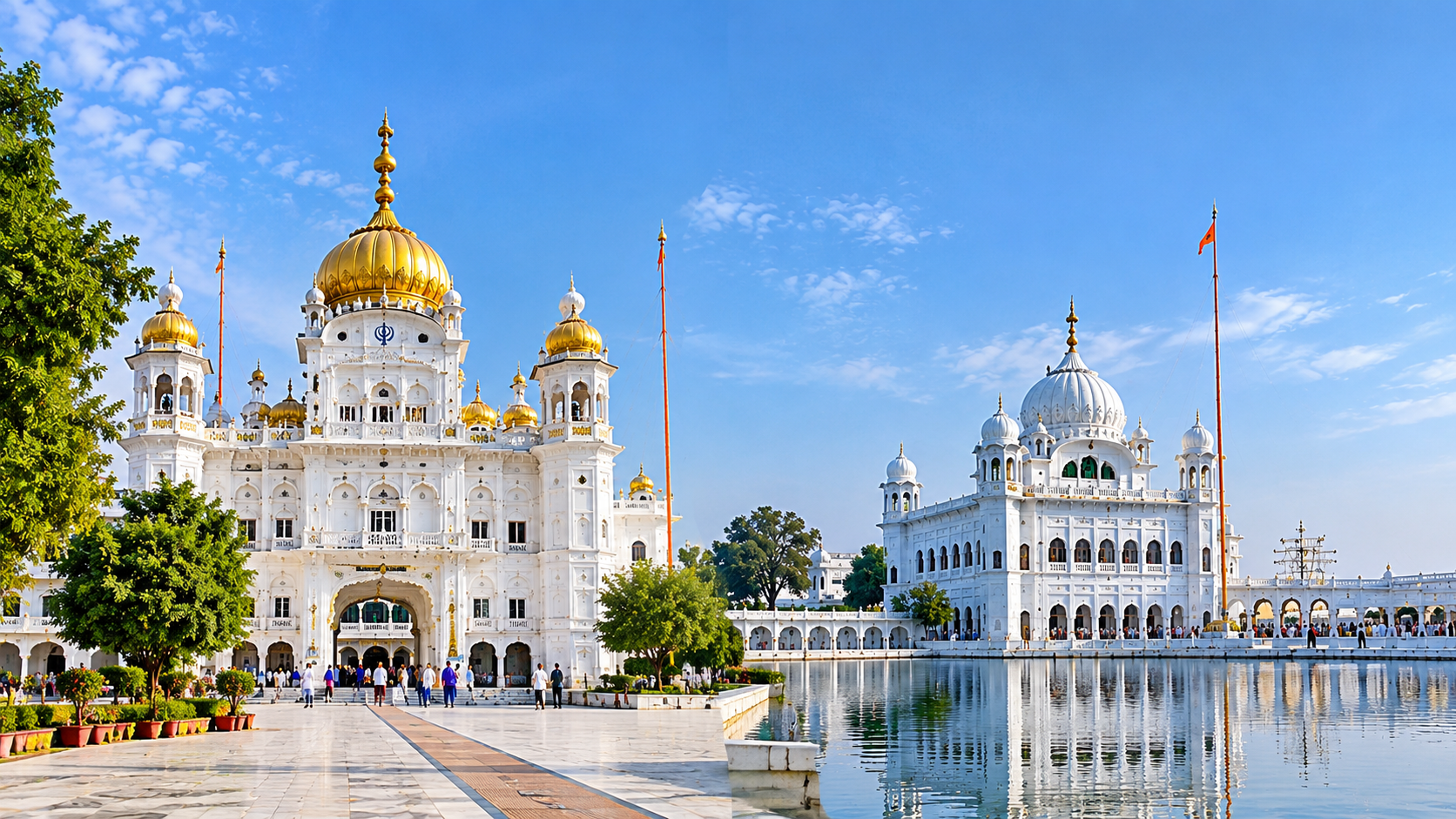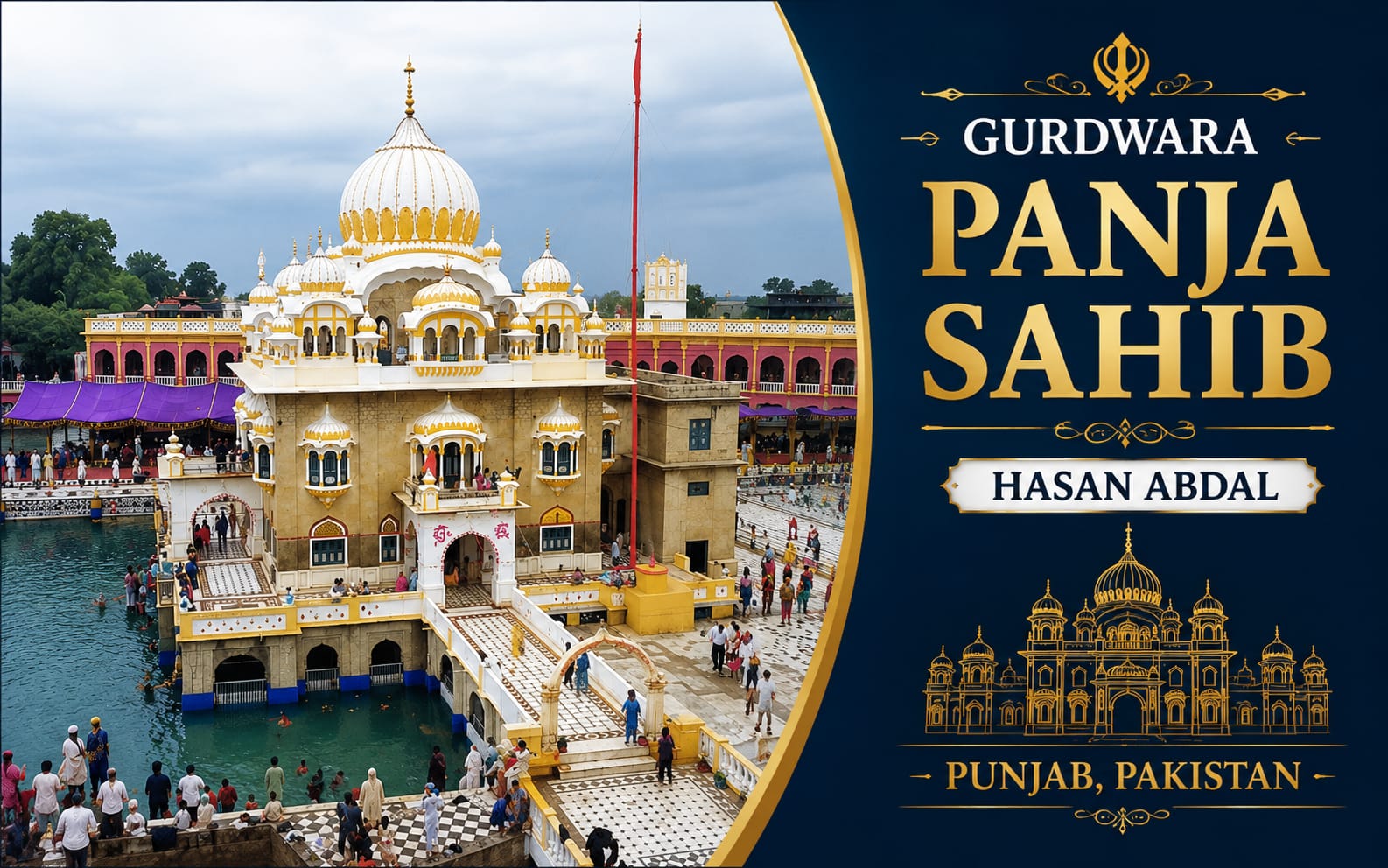
Gurdwara Panja Sahib in Hasan Abdal is one of the holiest Sikh shrines in the world. It is famous for the sacred handprint of Guru Nanak Dev Ji on a boulder, and for the clear spring of water that flows beside it. This guide covers its history, the story of the Panja, the Vaisakhi gathering and practical information for planning your visit.
Gurdwara Panja Sahib at a Glance
- Location: Hasan Abdal, Attock District, Punjab, Pakistan
- Significance: The place of the sacred handprint (Panja) of Guru Nanak Dev Ji
- Distance: About 45 to 50 km from Rawalpindi and about one hour from Islamabad by road
- Linked with: Guru Nanak Dev Ji, Bhai Mardana, Sardar Hari Singh Nalwa and the martyrs of Saka Panja Sahib (1922)
- Biggest annual occasion: Vaisakhi in April
- Also nearby: Taxila, a UNESCO World Heritage Site
Why Panja Sahib Is Sacred
Gurdwara Panja Sahib stands in the town of Hasan Abdal, in Attock District of Pakistani Punjab. The word Panja means an outstretched palm, from panj, meaning five. The Gurdwara is named after the handprint of Guru Nanak Dev Ji, which Sikh tradition says is imprinted on a large boulder inside the complex.
For Sikhs, it is a place that speaks of fearlessness, humility and the Guru's message that the gifts of God, like water, are meant to be shared with everyone.
The Miracle of the Panja
According to Sikh tradition, Guru Nanak Dev Ji came to Hasan Abdal during one of his long spiritual journeys, accompanied by Bhai Mardana. The visit is traditionally placed around 1521. A saint named Wali Qandhari lived on the hilltop above and controlled the spring of water nearby.
The Request for Water
Bhai Mardana was thirsty. The Guru sent him up the hill to ask Wali Qandhari for water. The saint refused and spoke harshly to him, and Mardana was sent three times with the same result. Guru Nanak told Mardana to remember that those who serve God should share, not hold back.
The Spring at the Foot of the Hill
The Guru then asked Mardana to lift a stone at the foot of the hill, and a fresh spring of water began to flow. Tradition says the spring on the hilltop began to dry up.
The Boulder and the Handprint
Angered, Wali Qandhari pushed a huge boulder down the hill towards the Guru. Guru Nanak Dev Ji raised his hand and stopped it, and the imprint of his palm remained on the rock. Tradition says Wali Qandhari then bowed before the Guru. This is the Panja that pilgrims come to see.
The boulder can still be seen inside the Gurdwara today, and the spring continues to feed the sarovar. Pilgrims wash their hands and faces in the holy water as an act of devotion.
History of Gurdwara Panja Sahib
The Gurdwara building and sarovar are credited to Sardar Hari Singh Nalwa, one of the most famous generals of Maharaja Ranjit Singh. He is said to have given the shrine the name Panja Sahib and built the first Gurdwara here in the early 19th century.
During British rule, the shrine came under the control of a hereditary custodian. In 1920, a Sikh jatha led by Kartar Singh Virk brought it back under Sikh management during the Gurdwara reform movement.
Saka Panja Sahib, 1922
Panja Sahib is also remembered for the Saka Panja Sahib of 30 October 1922. A train carrying Sikh prisoners from the Guru ka Bagh Morcha was due to pass through Hasan Abdal. The local Sikh community, led by Bhai Karam Singh and Bhai Partap Singh, wanted to serve the prisoners food and water at the station. When the authorities refused to stop the train, the Sikhs laid themselves on the railway line. The train was stopped, but Bhai Karam Singh and Bhai Partap Singh lost their lives and others were injured. Their sacrifice is a proud part of Sikh history.
What to See at Gurdwara Panja Sahib
- The Panja boulder: The rock bearing the imprint of Guru Nanak's hand
- The sacred spring and sarovar: A large pool fed by the clear spring, with fish swimming in the water
- Darbar Sahib: The main hall where Guru Granth Sahib Ji is installed and kirtan is sung
- Langar hall: Where free meals are served to pilgrims and visitors
Vaisakhi at Panja Sahib: The Largest Annual Gathering
The most important time to visit Panja Sahib is Vaisakhi, around 13 and 14 April, when the Sikh community celebrates the founding of the Khalsa. Pilgrims from India and from abroad visit Hasan Abdal for the occasion, along with Sikhs living in Pakistan. In April 2026, for example, Pakistan issued more than 2,800 visas to Indian pilgrims for Vaisakhi celebrations running from 10 to 19 April, covering Panja Sahib, Nankana Sahib and Kartarpur.
Typical activities include:
- Kirtan and religious gatherings (divan)
- Akhand Path and prayers
- Langar for pilgrims and visitors
Vaisakhi is a deeply moving time to visit, but it is also very crowded. If you prefer a quieter visit with more time at the shrine, choose a different date.
How to Reach Gurdwara Panja Sahib
- From Islamabad or Rawalpindi: About 45 minutes to one hour by car, depending on traffic
- From Lahore: About 4.5 to 5 hours by car via the M-2 Motorway towards Islamabad and then onwards to Hasan Abdal
- Public transport: Buses and vans run from Rawalpindi to Hasan Abdal, but most pilgrims prefer private transport for comfort
Visiting Tips
- Cover your head and remove your shoes before entering the Gurdwara
- Dress modestly and wash your feet at the entrance
- Langar is usually available, but timings can change on ordinary days
- Ask before taking photographs, especially near the Darbar Sahib
- Carry your passport and visa documents
- Confirm visiting times with your guide, as arrangements can change
Combine Panja Sahib with Taxila
Hasan Abdal is close to Taxila, an ancient centre of learning and Buddhist heritage, recognised as a UNESCO World Heritage Site. Many pilgrims visit both on the same day. You can read more about planning your journey in our Sikh Pilgrimage Travel Guide.
Frequently Asked Questions
Where is Gurdwara Panja Sahib located?
It is in Hasan Abdal, in Attock District of Pakistani Punjab, about one hour from Islamabad.
What is the story of the Panja?
According to Sikh tradition, Guru Nanak Dev Ji stopped a boulder rolling down the hill with his hand, and the imprint of his palm remained on the rock.
Is Panja Sahib one of the five Takhts?
No. The five Takhts are Akal Takht, Takht Kesgarh Sahib, Takht Patna Sahib, Takht Hazur Sahib and Takht Damdama Sahib. Panja Sahib is a historic Gurdwara of great importance, but it is not one of the Takhts.
Can I visit Panja Sahib as part of a longer yatra?
Yes. It is included in our 9-Day Sikh Yatra Pakistan Tour, together with Taxila.
Visit Panja Sahib with SikhTour.pk
Our team arranges comfortable travel, local guides and support for pilgrims visiting Gurdwara Panja Sahib and the other sacred sites of Pakistan. To book or ask about dates, contact us at info@sikhtour.pk or call +923-424-222-637.
SikhTour.pk — Your Journey, Your Faith, Your Experience.